📌 Vitalik Buterin links DeepSeek V4 to the future of Ethereum privacy.
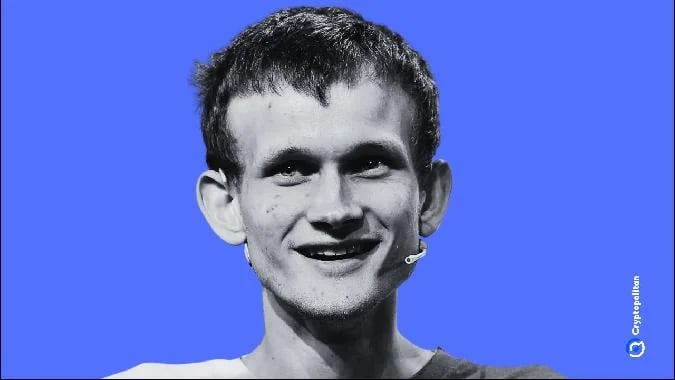
– Vitalik Buterin has linked DeepSeek V4 to the future of Ethereum privacy, presenting a plan to integrate local AI models into the network access layer.
The Ethereum co-founder emphasizes the many points of convergence between CROPS Ethereum Access Layer and CROPS AI.
DeepSeek V4’s ability to run on local hardware ensures that users rely on decentralized infrastructure rather than corporate cloud services.
Vitalik Buterin linked DeepSeek V4 to Ethereum’s privacy prospects, outlining a roadmap for introducing local AI models into Ethereum’s access layer. The Ethereum co-founder emphasized the significant overlap between the Ethereum Access Layer and CROPS AI solutions.
Buterin introduced the concept of CROPS AI (Censorship-Resistant, Open-Source, Private, and Secure AI) at the ETH Mumbai conference on March 12, discussing the potential threats that AI could pose to the security of cryptocurrencies. He noted that AI is becoming sophisticated enough to manage wallets and interact with blockchain, but the current ecosystem does not address privacy and security requirements.
Buterin believes that if AI agents are going to manage cryptocurrencies, they should be designed differently. In his opinion, this demonstrates the progress made by AI models.
According to Buterin, most people assume that locally running AI models are private. However, he emphasizes that this is a misconception.
The Ethereum executive cites the current state of local AI tools such as the Qwen 3.5 series, local agent frameworks and a growing set of open source software. He notes that while these models may appear autonomous on the surface, most of them turn to the OpenAI or Anthropic APIs for tasks they can’t do.
Talking about the progress of the CROPS AI project he is overseeing, Buterin said that DeepSeek V4 (a 2-bit quantized version requiring 90GB of memory) is critical for implementing private, locally processed transactions.
He noted that the CROPS access layer to Ethereum overlaps with CROPS AI, including ZK-based paid remote LLM calls and private RPC requests to Ethereum. He called for more AI models customized for Ethereum to improve the security of smart contracts and protocols.
Another thought that occurred to me is that there are many points of overlap between “CROPS Ethereum Access Layer” and “CROPS AI”. For example, we need a ZK mechanism for (paid) remote LLM calls. But if we have one, it’s also useful for another problem: private RPC reading of Ethereum.
The Ethereum co-founder notes that the connection between DeepSeek V4 and Ethereum’s privacy goals lies in the concept of CROPS AI. He emphasizes that users can query Ethereum data using local models like DeepSeek V4 without revealing their metadata, IP addresses, or wallet balance to centralized RPC providers. DeepSeek V4’s ability to run on local hosting ensures that users rely on self-sufficient infrastructure rather than corporate cloud servers.
Buterin proposes combining private local LLM calls with Ethereum’s ZK proof-of-stake, allowing users to handle their interactions with the blockchain offline while maintaining privacy. This helps to hide the connections between transactions in the chain, he said, noting that DeepSeek V4’s low system requirements are key. However, the 2-bit quantized version of DeepSeek V4 can also be used on powerful user workstations.







 Bitcoin
  Ethereum
  Tether
  BNB
BNB  USDC
USDC  XRP
XRP  Solana
  TRON
TRON  Lido Staked Ether
  Figure Heloc