📌 How might Ethereums enhanced development plan affect ETH over the next four years
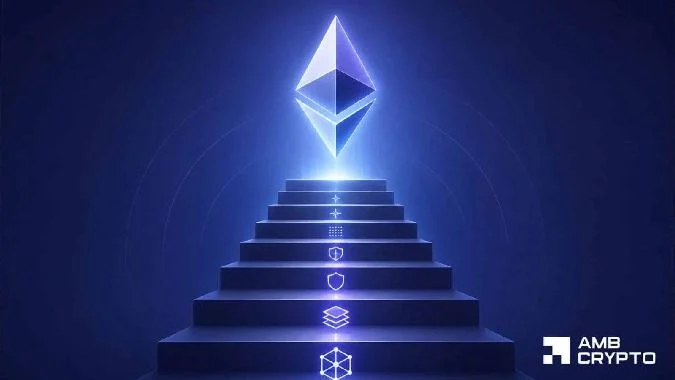
– The ‘Lean’ roadmap for Ethereum represents the most significant restructuring since ‘The Merge’will it be able to ensure stable scalability?
Ethereums development has entered a new phase: researchers have announced Lean Ethereuma multi-year reorganization program aimed at strengthening the network for the long term. Instead of a one-time update, the plan calls for the phased replacement of key elements of the Ethereum [ETH] protocol over the course of approximately 34 years.
The plan includes the implementation of recursive STARKs, quantum-resistant cryptography, multidimensional gas, and an updated state architecture to improve scalability and security. The developers also believe that H-star will be the last Ethereum fork before Lean, after which more significant changes will begin to accelerate.
The roadmap also calls for increasing gas limits on the network. This includes the adoption of more scalable state architectures to speed up finalization and reduce transaction costs.
Successful implementation of the Lean Ethereum roadmap has the potential to boost the Ethereum networks performance. In addition, backward compatibility will be maintained, ensuring sustainable growth over the next decade.
Based on the Lean Ethereum roadmap, developers are now turning long-term goals into practical protocol updates. Current efforts are focused on post-quantum-secure protocols and scalable state management. LINE_BREAP These are the two most significant long-term technical challenges for Ethereum. Rather than waiting for quantum computing to mature, developers have already launched PQ Devnets 04. These networks will be tested and evaluated for quantum-resistant cryptography while maintaining compatibility with existing wallets. , “detected_source_language “: “EN
“”,”detected_source_language”:”RU
More importantly, Glamsterdam has created the technological foundation to ensure Ethereums long-term viability through ePBS, protocol simplification, and an increase in the gas limit to over 200 million.
In addition to building infrastructure for fast and secure transactions, developers are rethinking state management mechanisms using Verkle trees, state expiration models, and scalable storage methods. The goal is to reduce validation costs and shorten node synchronization times while maintaining decentralized functionality.
These are logical next steps, as the underlying technology must first mature so that Ethereum can safely scale and reduce costs over the next decade.
Together, these two initiatives strengthen Ethereums long-term sustainability while minimizing disruptions to existing applications.
Ethereum is restructuring its core protocol to ensure faster scaling, enhanced security, and long-term network reliability.
ETH aims to secure the network for the future through quantum-safe upgrades and more efficient state management.
“,”detected_source_language”:”RU






 Bitcoin
  Ethereum
  Tether
  BNB
BNB  XRP
XRP  USDC
USDC  Solana
  TRON
TRON  Figure Heloc
  Hyperliquid