📌 Vitaliks Lean Ethereum roadmap has come under criticism due to its stated implementation timeline.
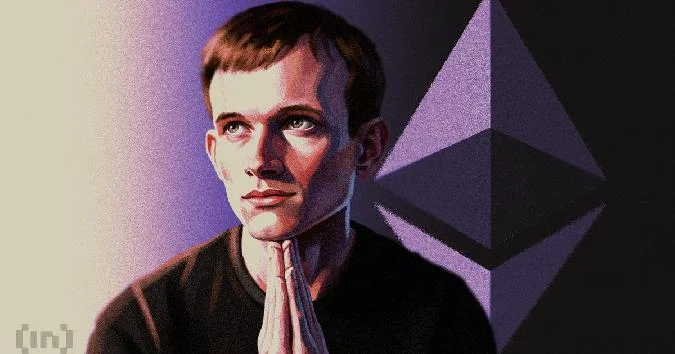
– Vitalik Buterin calls Lean Ethereum the networks third major transformation following The Merge.
Lean Ethereum implements recursive STARKs and replaces cryptography vulnerable to quantum attacks.
The new state architecture aims to reduce fees for many tokens by more than 10 times by 2030.
Buterin described Lean Ethereum as a radical overhaul, which he defines as the third major evolution of the blockchain following The Merge. The upgrade will take three to four years and will affect nearly all major elements of the protocol. LINE_BREButerin unveiled this plan as part of a public roadmap he called strawmapa working draft by the Ethereum Foundation. He noted that nearly all core components will be replaced, describing the initiative as bold but low-risk.
Recursive STARKs form the foundation. This system of cryptographic proofs will verify the blockchain without requiring each node to re-execute transactions. Buterin aims to make these proofs a central element of the protocol.
Quantum resilience has also become a higher priority. In the roadmap, cryptography vulnerable to quantum attacks is being replaced with hash-based schemes designed to withstand the advent of quantum machines. This shift is in line with the position of NISTthe U.S. standards bodywhich approved the first post-quantum encryption standards in 2024.
The most radical changes concern data storage in Ethereum. Buterin plans to retain the protocols current core architecture. He intends to add a new constrained state type that will be able to scale up to 100 TB by 2030.
Converting an ERC-20 token or a non-fungible token (NFT) to this format could reduce fees by more than 10 times. Complex applications, such as decentralized exchanges, will remain unchanged.
,detected_source_language:RU
Privacy will become a top priority rather than an afterthought, continuing Buterins broader initiative to protect privacy. In the near term, the Glamsterdam update is expected to increase the gas limit.
Buterin has reason to be optimistic. The 2022 Merge transitioned Ethereum to a proof-of-stake algorithm and reduced energy consumption by more than 99% . This went off almost without a hitch for users and applications.
But make no mistake, this is TRULY Ethereums third major iteration, just as The Merge was the second, Buterin stated.
The timeline drew swift criticismand not from outside observers. Dankrad Feist praised the concept but called the three- to four-year timeline too long. It was this Ethereum Foundation researchers work on data sharding that gave the technology its name, danksharding.
A fully validated STF and scaling to gigagas with transaction finalization in secondsthat inspires me! But 34 years is a very long time I believe we should be ambitious and implement this in about one year. I think its actually possible now with the help of LLMs, suggested Dankrad Feist.
His faith in AI is nothing out of the ordinary. strawmap itself is based on a people-first principle and acknowledges that AI-accelerated research can shorten timelines.
Others were more cautious in their comments. Some urged the Foundation not to make overly bold promises, to which they were told that underpromising only leads to falling short of goals.
Two years seems like the time frame between whats possible and whats likely, but from a communications perspective, I believe it would be irresponsible for V/EF to set expectations for 12 years. Its better to promise less.”,”detected_source_language”:”RU





 Bitcoin
  Ethereum
  Tether
  BNB
BNB  USDC
USDC  XRP
XRP  Solana
  TRON
TRON  Figure Heloc
  Hyperliquid